
Making Payments Simpler for Every Business.
PayKard was founded on a simple architectural conviction: merchants should never be constrained by the rigid boundaries of proprietary payment gateways. We build the neutral, sovereign orchestration layer that gives modern enterprises total control over their transaction lifecycle.
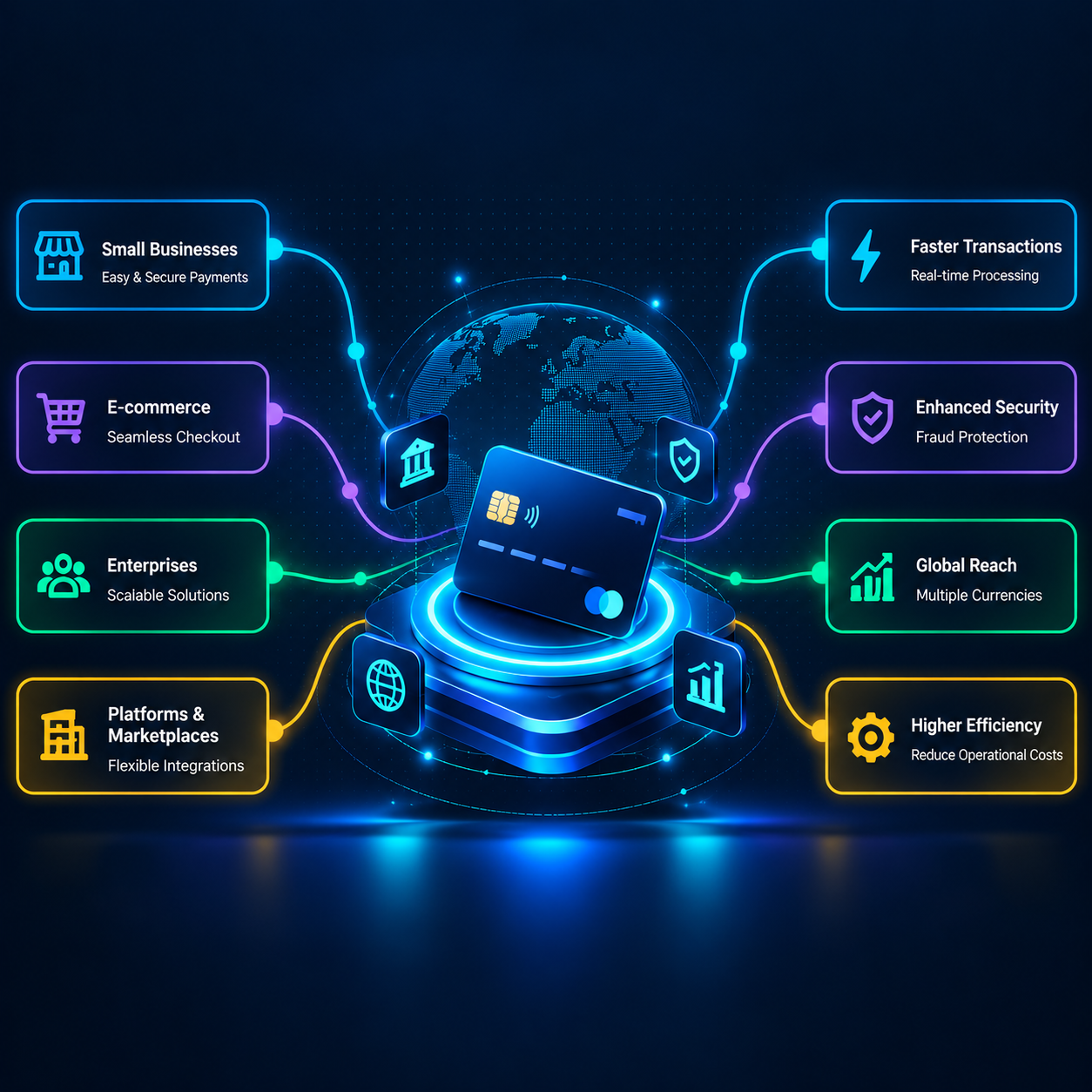
Simplifying fragmented payment infrastructure through unified connectivity.
"Payment stacks shouldn't be fragile spiderwebs of point solutions. We engineer the sovereign fabric that transforms fragmented rails into deterministic, self-healing commerce infrastructure."— PayKard Core Architecture Manifesto
Unconditional Gateway Portability
Vault credentials independently in an autonomous network vault so merchants switch acquirers with zero data ransom.
Open Payment Topology
Universal normalization across 60+ payment gateways, alternative payment methods (APMs), and local bank rails.
Financial Truth at Scale
A single immutable double-entry ledger that real-time unifies authorizations, disputes, fee schedules, and settlements.
Systemic Failures of Legacy Multi-Gateway Stacks
When global revenue scales, maintaining isolated payment connections introduces fragile single points of failure.
Provider Fragmentation
Every gateway requires bespoke API schemas, custom webhook listeners, and isolated error logic.
Inconsistent Reporting
Siloed settlement CSVs, divergent fee structures, and days spent manually reconciling statements.
Operational Complexity
Engineers are forced to engineer duct-taped retry queues, risking duplicate charges during timeouts.
High Integration Cost
Expanding to each new international market or local APM consumes quarters of engineering cycles.
N×N point-to-point connections with custom data mappers, fragmented vaults, and disconnected portals.
1-to-N normalized interface, sovereign token vault, real-time deterministic fallbacks, and a unified ledger.
Four Architectural Pillars of the PayKard Platform
Engineered from first principles for mission-critical reliability, sub-millisecond execution, and total enterprise autonomy.
Unified Connectivity
A single, robust API integration cleanly abstracting 60+ global acquirers and local payment rails.
Configurable Dynamic Routing
Deterministic rules engine executing sub-6ms decision trees factoring BIN country and fee caps.
Real-Time Observability
Granular telemetry tracking P99 latency, processor degradation, and payout anomalies.
Centralized Operations
Universal command center with an autonomous token vault and dispute defense automation.
Values Built for Scale & Integrity
Absolute Reliability
99.999% uptime is our foundational engineering contract. When payments fail, revenue halts.
Uncompromised Transparency
No hidden routing logic or opaque fee markups. Deterministic algorithms and open SDKs.
Developer-First Experience
Designed by systems engineers. Type-safe SDKs, exhaustive documentation, and instant sandboxes.
Customer Sovereignty
We succeed only when merchants own their payment architecture and their financial destiny.
Elena Brooks
Chief Executive Officer Ex-Head of Treasury Infrastructure15+ years spearheading multi-market global treasury networks.
Marcus Keller
Chief Technology Officer Distributed Systems & Low-LatencyArchitected brokers handling >100k transactions per second.
Sofia Larsson
VP of Payment Engineering Global Scheme ConnectivitySpecialist in ISO 20022 message orchestration and direct rails.
David Vance
Head of Information Security Cryptographic Vault ArchitectureLed PCI-DSS Level 1 v4.0 audits and HSM vault deployments.
Architectural Milestones
Architectural design of sovereign card vault and zero-lockin tokenization engine.
Launch of deterministic smart routing engine across Tier-1 global acquirers.
Unified ledger engine launched, automating multi-currency bank settlement matching.
Expansion to 60+ connectors, low-latency nodes, and enterprise compliance.
Ready to Build the Future of Payment Infrastructure?
We're always looking for systems engineers and payment architects who care deeply about building resilient financial systems.